27 February 2026
Beyond the Press: Why the Future of Print is a Strategic Partnership

Let’s be honest: if you’re running a print business today, your "to-do" list probably looks a lot different than it did five years ago. It’s no longer just about the "ink on paper". Today, you’re part logistics coordinator, part brand guardian, and part IT consultant.
The market is shifting. While traditional print volumes in some sectors are stabilising, the expectations around how that print is ordered, managed, and delivered have skyrocketed. If you find yourself stuck in a loop of quoting individual jobs and fighting over pennies on a spreadsheet, you’re in the "Transactional Trap".
The good news? There’s a way out, and it’s built on two pillars: the right web to print infrastructure and a consultative approach to selling.
The Shift from Commodity to Consultant
In the old days, a sales call was about turnaround times and price lists. Today, that’s a quick way to get ghosted. Corporate clients-especially those with multiple locations or complex marketing needs-aren’t looking for a printer; they’re looking for a way to claw back time.
Recent research from Printing United (2025) shows that over 70% of print service providers have already diversified into creative, mailing, and analytics services to stay relevant. Why? Because when you solve a business problem, you stop being a line item and start being a partner.
Mike Newman (theSPC) puts it perfectly:
The minute you stop asking 'What’s the job?' and start asking 'What business problem are you trying to solve?', your role changes instantly. You aren't just selling a brochure; you’re selling a solution to a marketing team that’s drowning in manual admin.
Why Web to Print is Your Secret Retention Tool
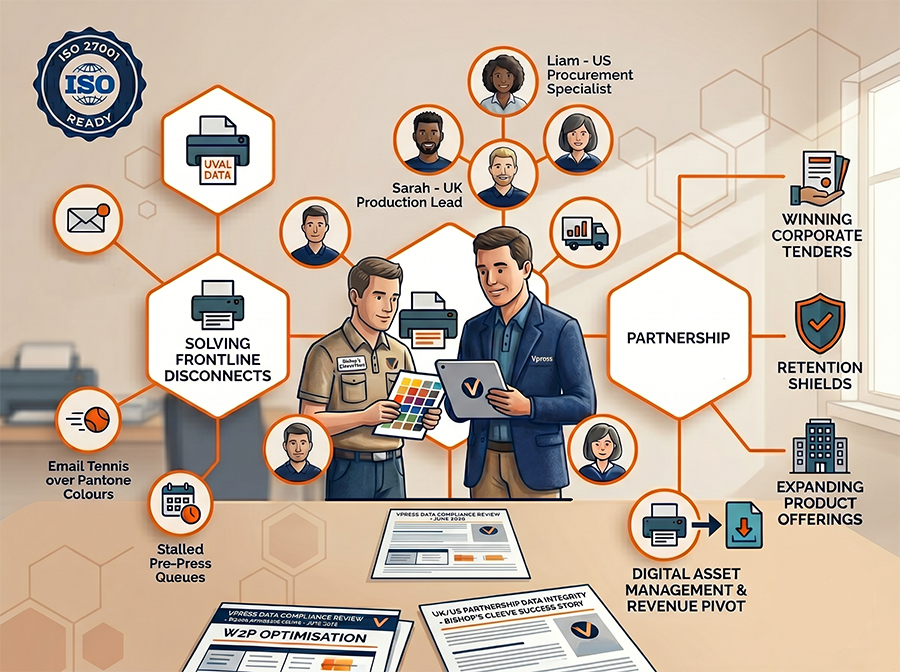
We won’t bore you with a technical definition, but in a B2B context, web to print is much more than an "online shop". It’s a bridge between your production floor and your client’s internal workflow.
For corporate clients, a dedicated portal provides:
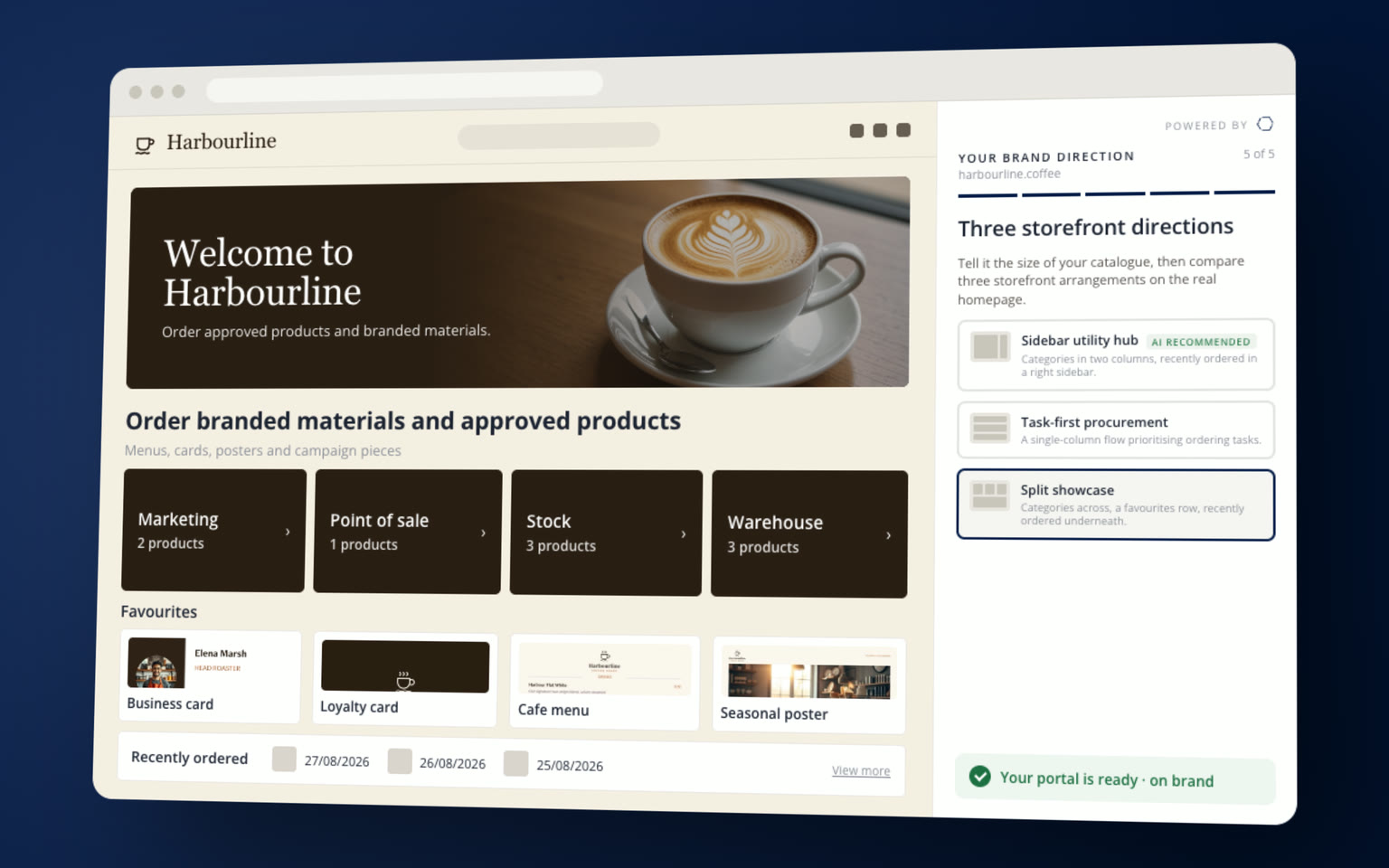
- Brand Security: No more "rogue" flyers with the wrong logo or off-brand colours.
- Decentralised Ordering: Regional managers can order what they need, while head office keeps the keys to the budget.
- Data Visibility: Real-time reporting on who is spending what, where.
The commercial impact is real. According to Smithers (2025), digital print and the software ecosystems supporting it are growing at a rate that is outpacing traditional methods, largely because they allow for the "mass-customisation" corporate brands now crave.
The 20% Efficiency Gain: It’s Not Just a Number
It’s often cited that automation can shave up to 20% off operating expenses, but where does that actually come from? It’s the "hidden" labour:
- Zero-Touch Prepress: When a client uses a template in your web to print portal, the file arrives press-ready. No back-and-forth emails about bleeds or fonts.
- Reduced Rework: Integrated approvals mean the client signs off on exactly what they see on screen.
- Automated Quoting: Studies by Alliance Insights (2025) suggest that manual quoting is one of the biggest bottlenecks for PSPs. Moving to a self-service model for standard items frees up your team to focus on high-value, complex projects.
Tech is the Engine, but You Need a Pilot
We’ve all seen it: a printer invests in a shiny new web to print platform, only for it to sit on a shelf because the sales team doesn't know how to pitch it, or the clients don't know how to use it.
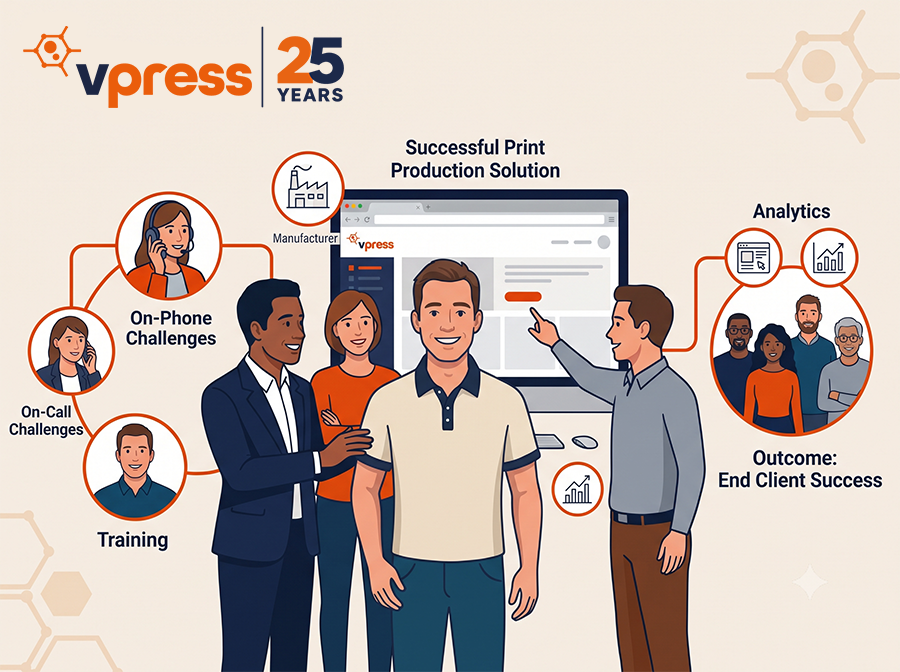
This is where "Consultative Selling" comes in. It’s about change management - helping your clients transition from their messy, manual processes to sleek, automated ones.
As Mike Newman notes:
Technology is the engine, but without a skilled navigator, the business never reaches its destination. Implementation is only half the battle; the real win is in cultural adoption-both for your staff and your customers.
The Bottom Line
The most resilient print businesses in 2026 aren't the ones with the fastest presses. They are the ones that have embedded themselves into their clients' daily lives. By combining a robust web to print platform with a consultative mindset, you aren't just selling print-you’re selling efficiency, brand control, and peace of mind.
And in a market this competitive, that’s the most valuable thing you can offer.
Ready to escape the transactional trap?
See how our B2B web-to-print portals can help you win - and keep - higher-value corporate clients. Let’s build a more resilient future for your business.
Frequently Asked Questions
Why do many W2P implementations fail to deliver the promised 20% ROI?
Technology is rarely the reason a project stalls; it’s usually down to "The Adoption Gap". Many PSPs invest in a platform but leave it to sit on a shelf because their sales team hasn't been trained in consultative selling. If you try to sell a portal based on "features" rather than "business outcomes" (like reducing brand-risk or cutting administrative labour), adoption will be low. True ROI comes when you combine the software with a consultant-led strategy that changes the way your team engages with the customer.
Does moving to an automated portal risk losing the "human touch" our clients value?
Actually, it’s the opposite. By automating the low-value, repetitive tasks - like chasing files, manual quoting, and proofing - you free up your team’s time to have more meaningful, human conversations. Instead of talking about bleed margins and paper weights, your account managers can talk about the client’s quarterly marketing goals or sustainability targets. Web to print doesn't replace the relationship; it removes the "noise" that prevents the relationship from flourishing.
How does a portal help corporate clients with "Brand Governance" and Compliance?
In a decentralised world, "rogue printing" is a massive headache for CMOs/Marketing Directors. Local branches often use local vendors, leading to inconsistent colours, outdated logos, and wasted spend. A web to print portal acts as the "Brand Guardian." It allows you to lock down core brand assets while giving regional teams the flexibility to customise text or images within approved parameters. You aren't just selling print; you’re selling peace of mind for the Head of Brand and visibility for the Head of Finance.
Quick links: Beyond the Press: Why the Future of Print is a Strategic Partnership
Table of contents
Share this article